Philanthropy
Blaine County Mental Well-Being Initiative blends St. Luke’s support, community input

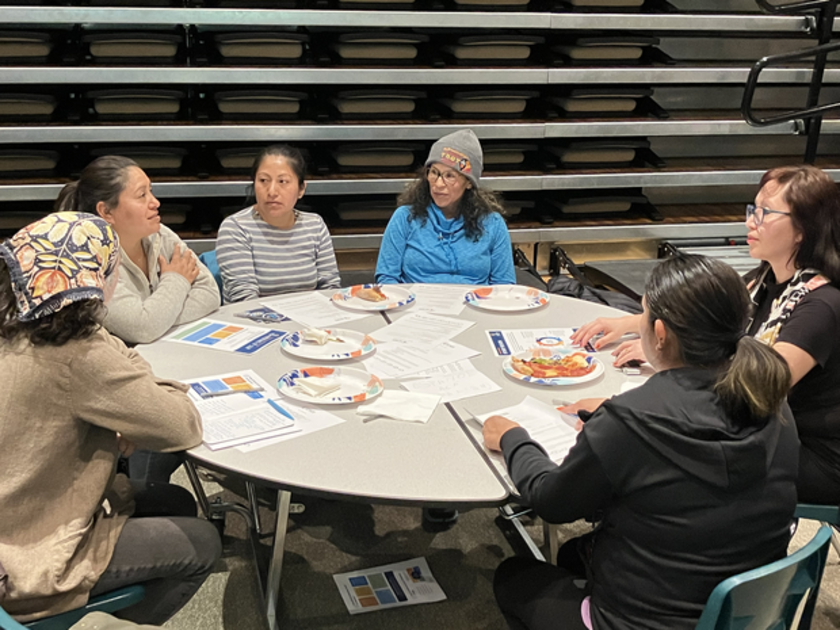
Blaine County community members speak during a March meeting.
By Alexis BennettLast Updated October 4, 2024
Earlier this year, the St. Luke’s Wood River Foundation committed funds to support a major well-being initiative in Blaine County.
Now, after multiple listening sessions, assessments and goal setting, the Blaine County Mental Well-Being Initiative has begun putting its plans into action to improve the mental and emotional well-being of community members.
The need is evident from the last several Community Health Needs Assessments (CHNAs). Every three years, St. Luke’s surveys communities within its service areas to gain insight into the most pressing health challenges in a region. Recent assessments in Wood River have identified access to health-related services and mental well-being, including suicide and substance abuse as areas of high concern.
After a while, we started to say, ‘we cannot continue to do the same thing because the same thing is clearly not working,’” said Jenna Vagias, project manager of Blaine County’s Mental Well-Being Initiative.
The primary hurdle: Community members are not getting the connection and support they need around mental health and substance abuse.
Connecting disparate efforts
St. Luke’s has always provided support to organizations and community members in the Wood River Valley to address mental and behavioral health needs.
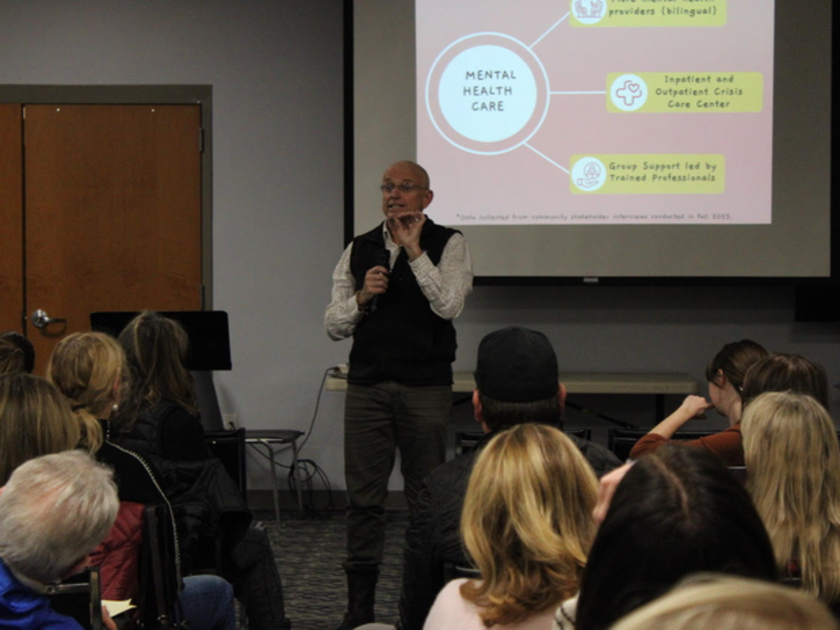
A recent MWBI listening session in Blaine County.
For example, at St. Luke’s Center for Community Health: Hailey, community members can access psychiatry and mental health counseling and screenings, attend free trainings and get substance abuse and counseling referrals to partners in the community. In 2023 alone, St. Luke’s created contracts for counseling scholarships, leading to referrals to local mental health providers for 222 community members. That is up from 137 contracts provided for community members just five years ago.
St. Luke’s also supports community organizations and partners focused on mental and emotional well-being, from upstream prevention to crisis intervention, through its Community Health Improvement Fund (CHIF) grant process.
But what MWBI discovered through their community sessions is that these efforts — and not just the people in the community — desperately need connection.
While community nonprofits, providers, St. Luke’s, schools, community leaders and others have been working to address the issue in their corners of responsibility, the efforts can occur in a vacuum.
“We work as a collective, pooling our resources instead of competing,” Vagias said. “We need to work together.”
That collective approach extends to everything from the initiative’s goal-setting process to developing strategies to tackling challenges and is all community-led.
Cradle to grave
While St. Luke’s Wood River Foundation provides funding, St. Luke’s Community Health and Engagement team is involved as consults and experts in this and other embedded initiatives.